The most frequently asked questions about RC Blimps, Aerostats and Custom LTA
LTA Technology: Questions & Answers
Have questions about our LTA technology? Explore our comprehensive FAQ guide divided by categories to learn more about the safety, weather limitations, and operational performance of our indoor, outdoor, and aerostat systems.
General Questions about LTA
What is the difference between an RC Blimp and an Aerostat?
RC Blimps are remote-controlled, motorized, and fully maneuverable airships. Aerostats are stationary, tethered (anchored) blimps or balloons without motors, used primarily as stable high-altitude platforms.
Which gas is used to inflate them and is it safe?
Helium gas is exclusively used for lift. It is completely non-flammable, non-explosive, and 100% safe for public events and indoor arenas.
How are the blimps transported to the location?
They are transported completely deflated and packed into compact transport cases or bags. This makes them easy to ship worldwide via standard courier services or fit into a regular vehicle trunk.
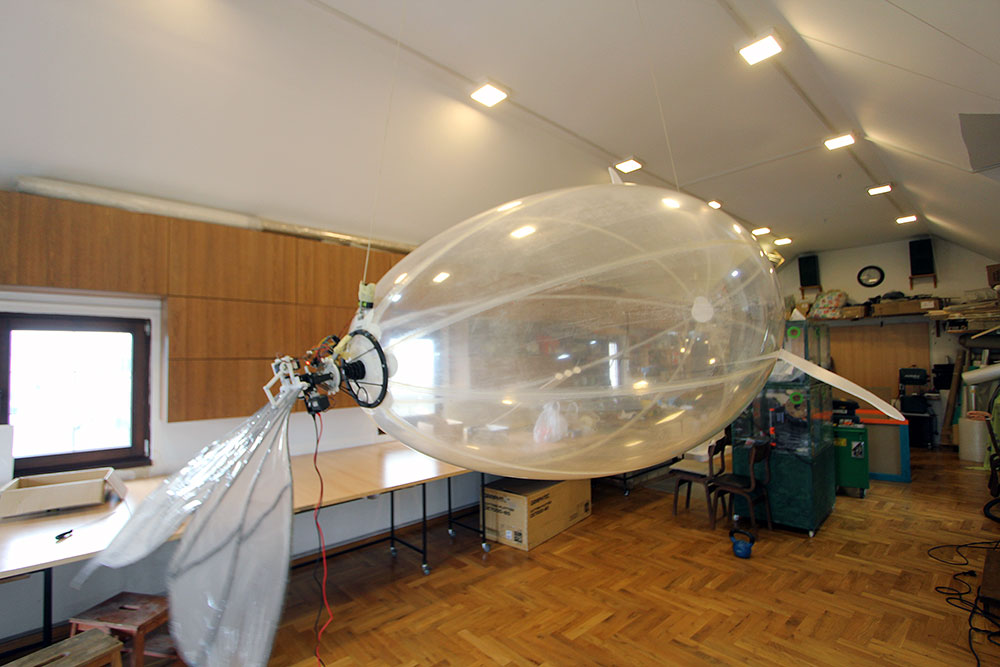 Whale Blimp tail detail
What materials are used for the envelope (hull/envelope)?
We use high-grade, lightweight materials like specialized Polyurethane (TPU) for indoor models (excellent helium retention) and multi-layer Nylon/Composite fabrics with UV protection for heavy-duty outdoor systems.
What happens if the envelope gets punctured during operation?
Because the internal pressure is very close to atmospheric pressure, helium leaks very slowly. The blimp will not pop; it will slowly lose lift for a safe, controlled landing. Small punctures can be fixed on-site in minutes with a specialized repair patch.
Is training required to fly these systems?
Indoor blimps are highly intuitive and require only a few hours of practice. For large outdoor RC blimps and complex aerostat systems, we provide comprehensive technical documentation, video tutorials, and optional hands-on training for your crew.
Indoor RC Blimps
What is the minimum space required to fly an indoor blimp?
They require enclosed spaces like sports arenas, exhibition halls, or concert venues with a minimum ceiling height of 5 to 6 meters and no active, strong air conditioning drafts.
Are they safe to fly directly over crowds?
Yes. Indoor blimps are extremely light, made of soft polyurethane (TPU) material, and use shrouded safety propellers. This makes them completely harmless even if they come into direct contact with the audience.
How long can they stay airborne on a single charge?
Indoor blimps run on lightweight LiPo batteries that typically last 20–40 minutes per charge. Batteries can be swapped out in less than a minute for continuous flight operations.
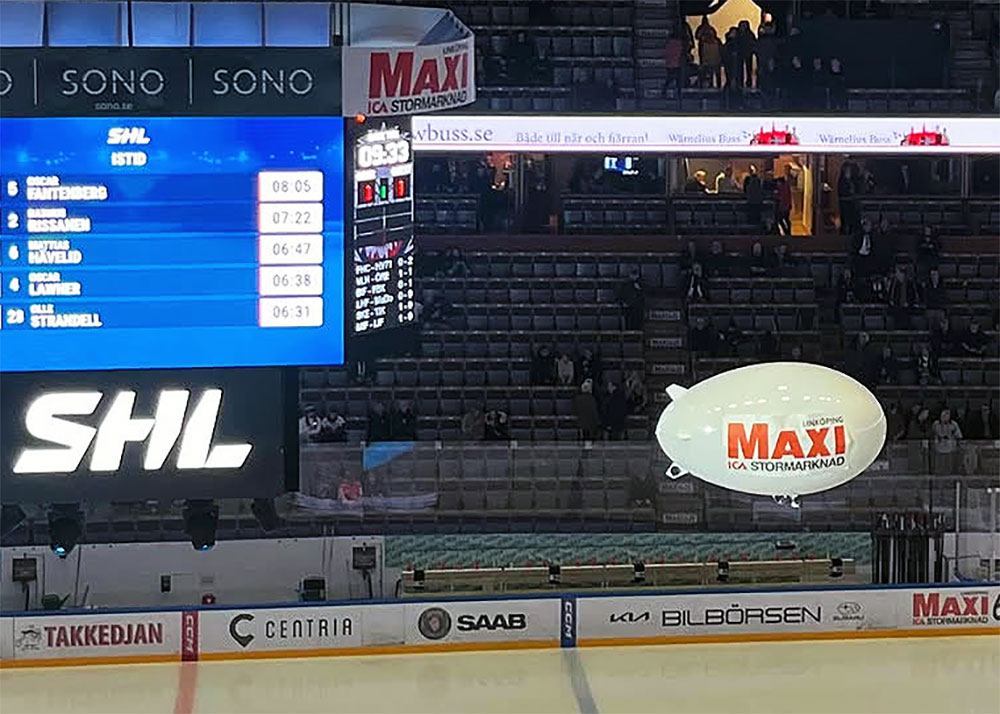 2m indoor RC Blimp in SAAB Arena Sweden
How long does it take to assemble and inflate them?
An indoor blimp can be assembled and inflated in 15 to 30 minutes. Larger outdoor blimps and aerostats take between 1 and 2 hours, depending on the size and crew experience.
Can they carry cameras or branding banners?
Yes. Even small 3-meter to 5-meter indoor blimps can carry lightweight internal RGB lighting, lightweight HD cameras, or interchangeable sponsor banners.
What is the porosity of the envelope?
Precisely because we use Polyurethane films of the best quality and the technology of securely joining envelope parts - the permeability of our envelopes to helium or hydrogen is a maximum of 1% of the total volume per day. And we guarantee that!.
Outdoor RC Blimps
What is the maximum wind speed outdoor models can handle?
Outdoor RC Blimps can typically handle winds up to 15–20 km/h (8–11 knots). Flying in stronger gusts is not recommended as it affects maneuverability and battery consumption.
Are they safe to fly directly over crowds?
Yes. Outdoor blimps are extremely light, made of soft polyurethane (TPU) material, and use shrouded safety propellers. This makes them completely harmless even if they come into direct contact with the audience.
Can an outdoor blimp be used in the rain?
Light rain or drizzle does not affect the electronics, but heavy downpours can add water weight to the top of the envelope. This reduces the overall payload capacity, so grounded standby is advised during heavy storms.
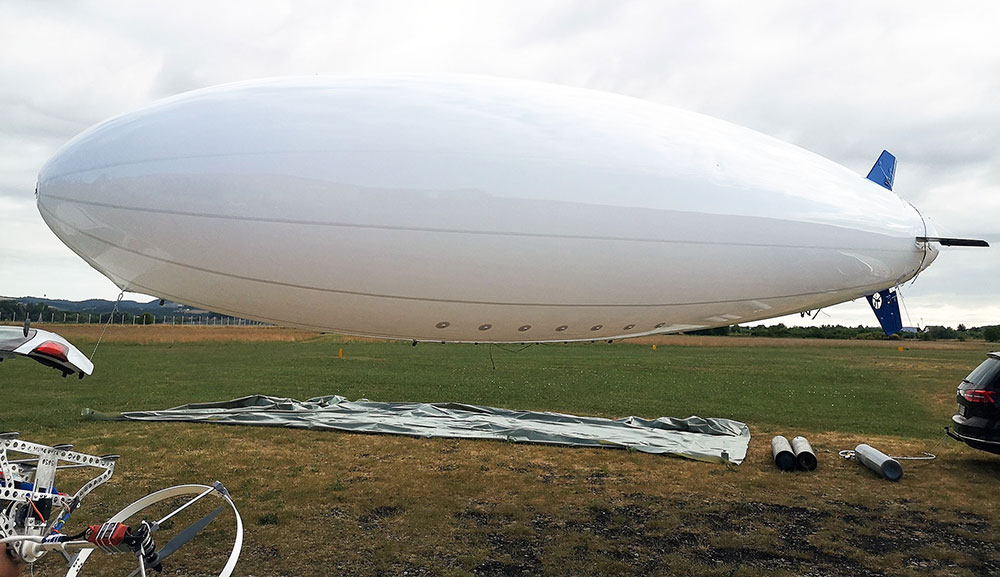 10m outdoor RC Blimp
Do I need a special license or permit to fly them?
Regulations vary by country. Indoor flights require no permits. Outdoor flights usually comply with local aviation authority guidelines (like FAA or EASA) regarding maximum altitude and proximity to airports.
What is the difference between indoor and outdoor blimps?
The biggest difference is where you fly. Indoor RC blimps are strictly for controlled, risk-free spaces. With no wind to worry about, any mistake is an easy fix, meaning anyone with a little dexterity can fly them. Outdoor blimps are a different story. Wind, temperature, and pressure all come into play, so you will definitely need an intermediate RC background and a serious attitude to handle them.
When I get an outdoor RC Blimp where do I start?
Our top advice for new outdoor RC Blimp owners is to start indoors! Inflating your blimp with air and assembling it inside gives you a perfect, stress-free look at your final setup. It is the ideal opportunity to power on the electronics, run "cold" tests on all subsystems, and get comfortable with the flight controls. Even though we fully test and pre-configure the RX/TX system before shipping, we know many pilots like to tweak the controls to match their habits or left-handed preference. Just remember to proceed with caution!
First outdoor flight?
We recommend waiting for ideal or near-ideal weather for your first outdoor flight. Look for a day with absolutely no wind or precipitation. To keep things stress-free, always use a safety line on your first run to hold the blimp back and keep it secure. This gives you a great feel for how the blimp handles and how easy it is to control under safe conditions. Once you feel completely confident in your RC skills, you can let it fly freely in short circles.
Aerostats
What equipment can a tethered Aerostat carry?
They are ideal for heavy payloads. They easily carry stabilization gimbals, 4K broadcast cameras, thermal imaging sensors, or Wi-Fi/5G telecommunication relays.
How is the power supplied to an Aerostat?
Power can be supplied via on-board batteries or through a tether line with an integrated power cable (tethered drone/aerostat technology) for unlimited flight time.
How high can a tethered Aerostat fly?
Standard commercial aerostats fly at altitudes between 50 and 150 meters, which is ideal for advertising and surveillance. Specialized scientific models can reach altitudes of several hundred meters depending on the tether length and local regulations.
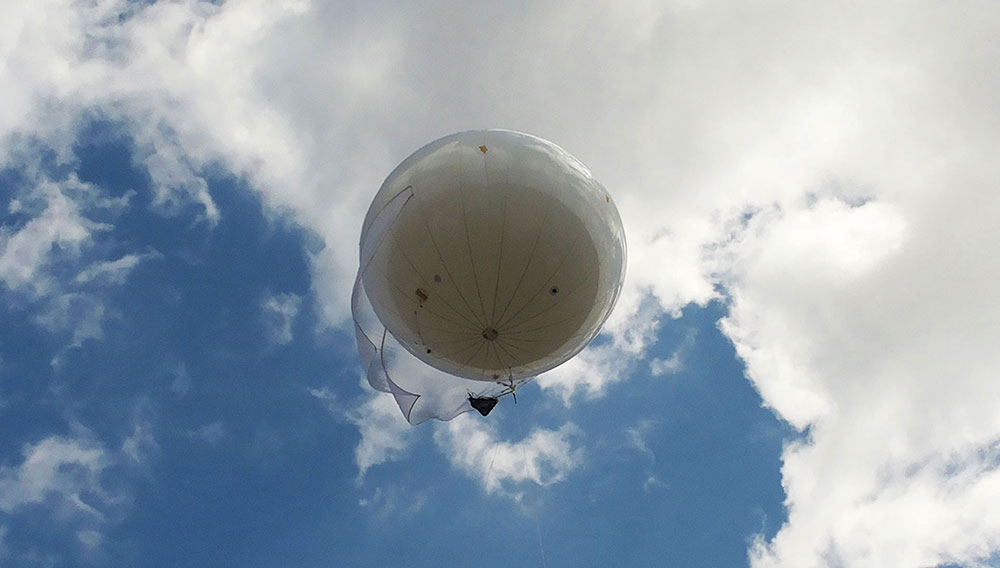 Aerostat in flight
How long can an Aerostat stay airborne?
Tethered aerostats can stay airborne for days or even weeks at a time. They are only limited by natural, minor helium leakage, requiring a quick top-off every 5 to 7 days.
Why and when to use Aerostats?
Aerostats are used whenever you need a platform to stay in the air for days or months at a time. Since they are anchored to the ground by a cable or rope, their only job is to stay stable at the end of their tether. This simple task allows them to log incredible amounts of flight time without using much energy. That is why they are the go-to choice for monitoring borders, mines, and agricultural or marine farms—essentially anywhere that needs constant, long-term observation. To this day, nothing beats them at this task.
What Aerostats forms are there?
Aerostats are primarily manufactured in two main profiles: the ellipsoid and the zeppelin shape. Each configuration offers distinct advantages, chiefly concerning the logistics of deployment, operation, and maintenance. Ultimately, their enduring relevance in modern industries stems from their inherent simplicity and exceptional operational safety.
Custom shapes/LTA
Can you turn any product shape or logo into a flying RC Blimp?
Almost any shape can be replicated as an inflatable. However, for a shape to actually fly as an RC Blimp, it must follow basic aerodynamic principles. Symmetrical, streamlined shapes work best. Complex or sharp-edged shapes are usually better suited as stationary tethered inflatables.
How do custom shapes affect the stability and flying characteristics?
Custom shapes produce more aerodynamic drag than standard cigar-shaped blimps. This means they require larger or more powerful motors, heavier battery configurations, and experienced pilots to operate smoothly, especially outdoors.
Can custom shapes be used both indoors and outdoors?
Yes, but indoor environments are much safer for non-standard shapes. Outdoors, custom shapes act like sails and are highly sensitive to wind. Therefore, outdoor custom shapes are usually strictly limited to low-wind conditions (under 10 km/h).
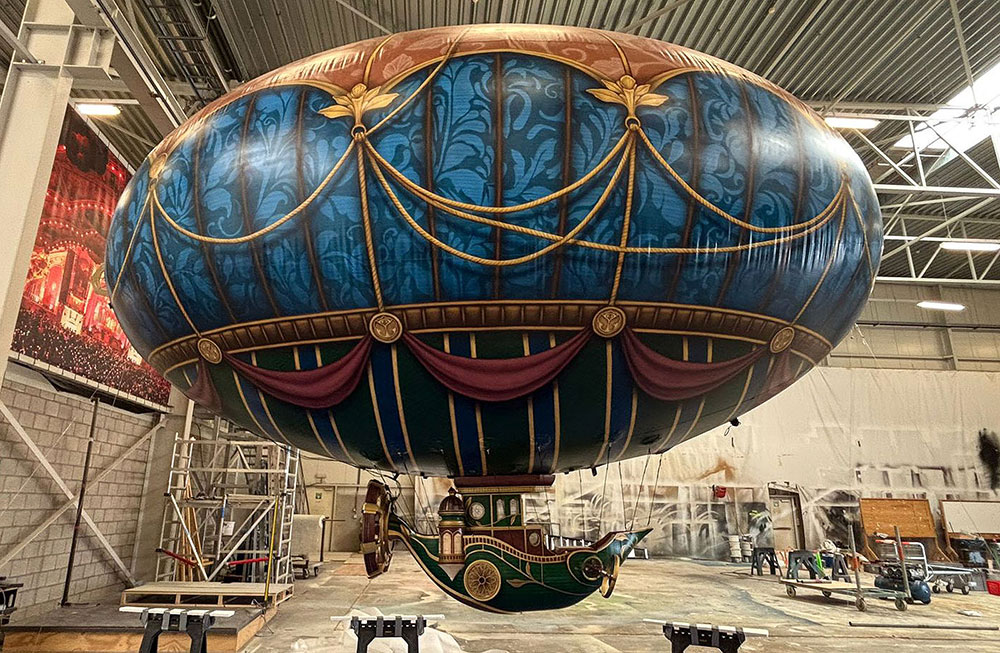 Flying Dutchman RC Blimp flying boat
How is branding and artwork applied to a custom shape?
We use high-resolution, full-surface digital printing directly onto the TPU or fabric before assembly. This ensures that colors, logos, and intricate product details look sharp, vibrant, and perfectly aligned with your brand guidelines.
What is the minimum size for a custom-shaped flying blimp?
Custom shapes generally have less internal volume than standard blimps, meaning they hold less helium and provide less lift. To carry all the necessary motors, batteries, and RC electronics, a custom indoor blimp usually needs to be at least 4 to 5 meters long, or have an equivalent volume. That said, dimensions can be smaller depending on the specific shape and the thickness of the envelope material (weight per m²).
How long does the design and production process take?
The process takes longer than standard models. It involves 3D CAD modeling, aerodynamic volume calculations, pattern cutting, digital printing, and rigorous leakage testing. The typical lead time is 4 to 6 weeks depending on the complexity.
Still have questions?
If you have any further questions, specific technical inquiries, or need a consultation regarding your custom project, please do not hesitate to reach out. Our engineering team is here to help you find the perfect LTA solution. Contact us directly at rczeppelin@gmail.com and we will get back to you as soon as possible.